Mallorca isn’t just “doing well” as a destination—it’s operating at Europe-leading scale.
In 2023, Mallorca recorded 47.2 million nights spent by international tourists in paid accommodation, the highest figure for any EU region.
And the pipeline behind those nights is still expanding: in 2025, 13,557,606 tourists chose Mallorca as their main destination (up 1.35% year over year).
Mallorca Tourism Growth by Country Stats
- 33.8 million passengers passed through Palma de Mallorca Airport in 2025, confirming the island’s record level demand.
- 24.8 million international travelers flew in last year, while domestic traffic slipped slightly, showing Mallorca’s clear reliance on foreign markets.
- Germany remains No. 1, sending 9.8 million passengers in 2025, even as growth cooled compared with previous years.
- The United Kingdom continues to gain ground, with 5.9 million arrivals, up 3 percent year on year.
- Switzerland is quietly accelerating, rising 5.4 percent to 1.3 million visitors, one of the fastest growing European markets.
- Mallorca recorded 47.2 million international overnight stays in 2023, the highest figure of any EU region.
- Tourist spending reached €16.2 billion in 2024, a sharp 16 percent increase in just one year.
- Average visitor spend climbed to €1,208 per trip, highlighting Mallorca’s shift toward higher value tourism.
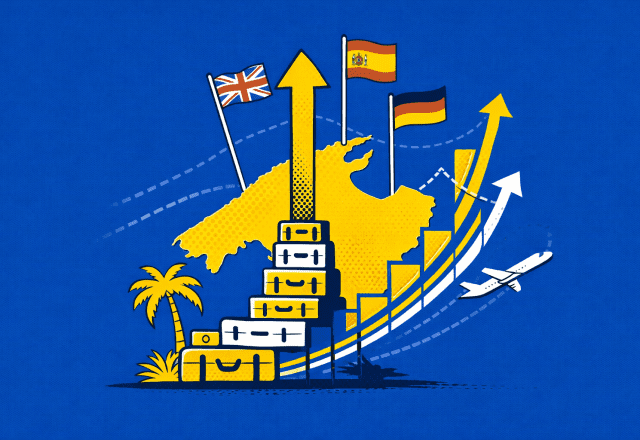
- The island’s visitor mix remains dominated by Germany, Spain, and the UK, which together account for the majority of arrivals.
Which countries are driving Mallorca tourism growth right now?
If you want a clean, practical signal by country, start with Palma de Mallorca Airport (PMI). It’s the island’s main gateway, and Aena’s country-level passenger totals map closely to demand from key origin markets.
In 2025, PMI handled 33.8 million passengers (+1.5% vs. 2024) and 24.8 million international passengers (+2.4%).
Among the biggest origin countries in 2025:
- Germany: 9.84M passengers (-0.8%)
- United Kingdom: 5.92M passengers (+3%)
- Switzerland: 1.3M passengers (+5.4%)
What this implies: growth momentum is shifting away from Germany (slightly down) and toward the UK and Switzerland (up)—with the UK looking like the most important “growth engine” among the top markets.
How dependent is Mallorca on Germany and the UK?
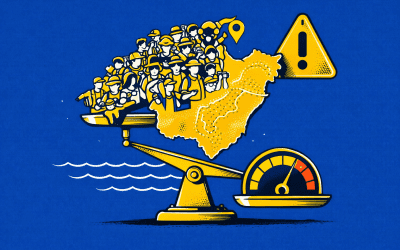
Mallorca’s demand is still unusually concentrated.
A study presented by Mallorca’s hotel federation reported that 60.3% of Mallorca’s tourism comes from Germany and the UK combined, and warned this reliance is higher than many competing destinations.
That concentration matters because even “small” changes in either market can swing the entire season.
Is Mallorca still growing overall, or is it plateauing?
It depends which lens you use:
Tourists (FRONTUR, main destination): Mallorca is still growing, but slower.
- 2023: 12,477,497
- 2024: 13,379,634
- 2025: 13,557,606 (+1.35% vs. 2024)
That’s a classic pattern of a mature destination: a strong post-pandemic rebound followed by low single-digit growth on top of already-high volumes.
Which countries are most likely to grow next in Mallorca?
You can triangulate “next growth markets” using two signals:
- Airport growth beyond the top two
Switzerland is already growing faster than the big markets (+5.4% in 2025). - Connectivity patterns (routes) that scale easily
PMI’s busiest international routes skew heavily toward German and UK cities, but also include Zurich and major hubs that can expand with frequency increases.
In plain terms: if airlines add seats from markets like Switzerland (and other well-connected European hubs), Mallorca can grow without needing a new “breakout” market.
How much does visitor spending amplify “growth” beyond headcount?
Mallorca’s economic impact has increasingly been driven by spend per visitor, not just visitor totals.
According to the Mallorca Sustainable Tourism Observatory (using IBESTAT tourism spend survey inputs), average tourist expenditure per person in Mallorca reached €1,208 in 2024, up 8.5% year over year.
That matters because a destination can “feel busier” or generate more revenue even when visitor growth slows—especially if the mix shifts toward higher-spending markets.
How seasonal is Mallorca, and does country mix affect seasonality?
Mallorca’s seasonality is structural (sun-and-sea, school holidays, airline capacity), but country mix can change shoulder-season performance.
A quick indicator from official FRONTUR output for the Balearics: in December 2025, Germany remained the top source country for the islands overall, but the UK showed strong month-level growth while Spain was sharply down.
The key takeaway is not “December is everything”—it’s that different markets behave differently in winter, and the countries you grow can either reduce or worsen seasonality.
How big is Mallorca in the EU tourism landscape?
One statistic captures Mallorca’s position better than any marketing copy:
In 2023, Mallorca registered 47.2 million nights spent by international tourists in tourist accommodation, the highest in the EU.
This is a scale story. Many destinations compete on “beauty.” Mallorca competes on capacity, connectivity, and repeat demand—and that’s why country-level shifts are so important.
What are the smartest ways to interpret “growth by country” for Mallorca?
A common mistake is to treat any single dataset as the whole truth. For Mallorca, you get the best read by combining:
- FRONTUR (IBESTAT/INE): “Tourists whose main destination is Mallorca” (demand reality).
- Aena (PMI): “Passengers by country” (supply + demand combined, and very actionable for forecasting).
- Eurostat nights: “International nights spent” (Europe-wide benchmark).
- Spend per visitor: “Economic impact even if volumes flatten.”
When these line up, you can be confident. When they diverge, it usually points to a mix shift (length of stay, accommodation type, or travel style) rather than “bad data.”
Sources
- Eurostat. Tourism statistics at regional level
- IBESTAT (FRONTUR). Flux de Turistes (FRONTUR)
- Aena. Palma de Mallorca Airport
- PalmaAirport.info. Palma de Mallorca Airport Ends 2025 with 33.8 Million Passengers
- Mallorca Sustainable Tourism Observatory. Annual Report
- Cadena SER (Radio Mallorca). Alertan de que Mallorca depende un 60,3 % de dos mercados

Alison is a travel writer for Best Mallorca Hotels with a passion for solo adventures and photography. She seeks out unusual destinations and hidden gems, sharing stories that inspire curiosity and exploration. Her work has been featured in outlets including Forbes, CNN, Travel + Leisure, and Yahoo.