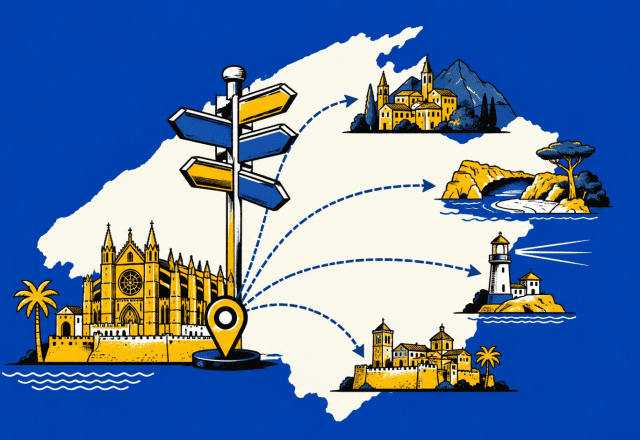
You can sit in Palma’s old town with a cortado and still be just an hour away from mountain monasteries, Roman ruins, or a wild sand beach. That’s the real luxury of staying in Mallorca’s capital in 2026: almost the whole island works as a day trip.
This guide picks the most rewarding places to visit from Palma, how to reach them (with current free‑fare public transport info), and how to fit two or three into one smart itinerary.
Why Explore Beyond Palma?
Palma has enough cathedrals, cocktails, and concept stores for a long weekend, but the island’s character changes fast once you leave the ring road.
- To the west, the Serra de Tramuntana climbs straight out of the sea.
- Inland, small stone towns still feel agricultural.
- North and south, bays and wetlands swap resort strips for birdlife and quiet dunes.
Buses, the vintage Sóller train, and the free TIB network in 2026 mean you don’t need a car to see all that variety. If you do rent one, distances stay short: most destinations in this guide sit within a 45–70‑minute drive.
Top Villages and Towns Near Palma to Discover in 2026
Valldemossa — Tranquil Mountain Charm and Chopin’s Legacy
Perched in a green valley in the Tramuntana, Valldemossa feels made for slow wandering: blonde stone, terracotta roofs, flowered doorways, and terraced hillsides of olive and almond.
Why go
- Atmospheric lanes and viewpoints over the valley.
- Strong monastic and literary history.
- Cooler air in summer, misty, moody in winter.
Don’t miss
- Real Cartuja de Valldemossa (Royal Carthusian Monastery)
Once home to Carthusian monks and, briefly, Chopin and George Sand.
Opening hours (2026)
- April–September: 09:30–19:00 (ticket office to 18:30)
- Sundays: 10:00–13:00
- Closed: 1 January, 25 December, and all Sundays in January/December
Tickets
- Adults: €8.50
- Students: €6
- Seniors: €7
- Groups (4+): about €7.50
- Children 10–14: €4
- Short piano recitals (around 15 minutes) run several times a day (roughly 10:30–14:15 slots).
Buy on site or online; last entry is 30 minutes before closing.
- A coca de patata (local sweet bun) and coffee in the main square.
- Short walks on the tracks above town for views without committing to a full hike.
How to get from Palma
- By bus (TIB Line 210)
- Departs from Estació Intermodal, Plaça d’Espanya.
- Runs via Valldemossa to Deià and Port de Sóller.
- Roughly every 30–60 minutes from around 06:00 to midnight in the 2025/26 winter schedule, with extra summer frequency.
Fare situation 2026
TIB interurban buses are free if you use an Intermodal Card or Single Card (also valid for EMT Palma transfers). Cash tickets still cost money.
Best time to visit
Aim for a morning arrival before 10:30, especially July–September, when day‑trip buses and tour groups swell the streets. On hot days, linger into late afternoon when light softens and many visitors have left.
Sóller — Vintage Trains, Orange Groves & Seaside Ambiance
Sóller sits in a bowl of citrus orchards with mountains all around. It’s also tied to Palma by one of Spain’s most charming pieces of transport: the wooden Ferrocarril de Sóller.
Why go
- The classic vintage train experience.
- Grand Modernista architecture around the main square.
- Easy link to Port de Sóller and the sea.
Unique experiences
- Ferrocarril de Sóller (vintage train)
- 27 km through orchards and tunnels, about 55 minutes each way.
- 2026 prices: roughly €15–18 one‑way, €25–32 return per adult.
- Several departures daily between about 08:00 and 19:00.
- Not part of the free‑fare TIB system; buy tickets at the separate Sóller train station near Plaça d’Espanya or online at fsoller.com.
- Sóller tram to Port de Sóller
- 5 km ride, about 15 minutes.
- Around €7–8 one‑way.
Trundling along orange groves, then the waterfront, it’s touristy but memorable.
How to get from Palma
By vintage train
Classic option and the one kids and rail fans remember.
- By bus (TIB Line 204/210 family)
Modern coaches from Estació Intermodal to Sóller or Port de Sóller in roughly 30–40 minutes, free with Intermodal Card. Good if you’re on a budget or the train is sold out.
Best time to visit
Late January–April for orange blossom and milder temperatures. In peak summer, take the earliest train or bus, explore Sóller in the morning, then retreat to Port de Sóller for a swim and a late lunch.
Alcúdia — Medieval Walls and Roman Ruins
Alcúdia’s old town is walled, compact, and full of life, set between the bays of Pollença and Alcúdia. It pairs a satisfying historical walk with access to beaches and wetlands.
Why go
- One of Mallorca’s best preserved medieval centres.
- Tight, easily walkable streets with plenty of cafés.
- Roman remains at Pollentia just outside the wall.
Key sights
- Old town walls and gates
Walk the ramparts for views over the maze of roofs.
- Ciutat Romana de Pollentia & Monographic Museum
Ruins of the Roman city plus a small museum in town.
- Opening: Closed Mondays. Exact daily times vary; plan for a morning or mid‑afternoon visit and check Alcúdia’s official tourism site before you go.
Tickets (combined ruins + museum, 2025/26 rates)
- Adults: around €3.50
- Reduced (children, students, seniors, groups): €2
Young children are often free.
Pack water and sun protection; the site is exposed and shade is limited.
How to get from Palma
- By bus (TIB Line 340 / 321 / A33 combo)
- From Estació Intermodal to Alcúdia or Port d’Alcúdia, roughly 60–90 minutes.
- The A33 Aerotib goes from the airport to Port d’Alcúdia (via Inca, Sa Pobla, Alcúdia) daily, 07:40–23:35 from the airport, with very early returns from the north.
Choose what’s closest to your accommodation.
Best time to visit
- Market days (usually twice weekly in season) bring energy but also crowds.
- For quieter lanes, try a late afternoon visit and stay for dinner as day trippers leave.
Petra — Rural Traditions and Historic Roots
Petra sits almost in the geometric centre of Mallorca, surrounded by fields rather than hotels.
Why go
- Strong sense of traditional rural life.
- Tasting Mallorcan wines without resort gloss.
- History of Fray Junípero Serra, the controversial missionary associated with California’s missions.
You get simple stone streets, low‑key squares, and a pace that feels set by farm work, not tourism. It’s a good choice if you’ve seen the coasts and want to understand the island’s interior.
How to get from Palma
- By train + short transfer
- TIB trains from Palma to Manacor stop at Petra; journey time around 45–60 minutes.
- The train is covered by the free‑fare policy with an Intermodal Card.
- By car
Around 45 minutes via the Ma‑15.
Best time to visit
Pair Petra with a long lunch at a local restaurant and a vineyard visit in spring or autumn, when the countryside is green and temperatures kinder.
Port d’Andratx — Luxury Yachting and Authentic Fishing Village
Port d’Andratx lies in a natural harbour on Mallorca’s southwest tip. Expect sleek yachts and waterfront terraces, but also a working fishing fleet and lovely Tramuntana foothills behind.
Why go
- Sunset drinks by the water.
- Access to coastal walks and coves.
- People‑watching and boat‑spotting.
You can stroll the promenade, detour up residential lanes for views, or explore nearby calas by car or taxi.
How to get from Palma
- By bus (TIB routes in the 100 series)
Buses run from Estació Intermodal to Andratx/Port d’Andratx in under an hour, free with Intermodal Card.
- By car
About 35–45 minutes via the Ma‑1 motorway.
Best time to visit
Late afternoon into evening works best. Start with a swim at a nearby cove, then drift into port for dinner as the light drops behind the hills.
Additional Must-Visit Places Accessible from Palma
Deià — Artistic Village with Coastal Views
Halfway between Valldemossa and Sóller, Deià clings to the hillside above a ravine, with stone houses stacked up like steps.
Why go
- Longstanding artistic community and bohemian history.
- Dramatic setting with the sea just below.
- Great base for short coastal and hill walks.
Most visitors combine a stroll through the village with a descent to Cala Deià, a small rocky cove with clear water and simple eateries. The cove is beautiful but can feel busy and parking is tight, so public transport helps.
How to get from Palma
- By bus (TIB Line 210)
Same line as Valldemossa and Port de Sóller. Ride time from Palma is roughly 50–70 minutes, depending on stops.
Tip
If you’re already in Valldemossa, hop the same bus onwards to Deià rather than returning to Palma. See itineraries below.
Pollensa — Picturesque Squares and Steps
Not to be confused with seaside Port de Pollença, Pollensa town is inland, tucked between low hills with a handsome main square.
Why go
- Café‑filled Plaça Major with a relaxed local feel.
- The Calvari steps: 365 steps climbing to a chapel and wide views.
- Easy links to the north’s beaches and Cap de Formentor.
Pollensa is lively without losing its residential core. It makes a satisfying contrast to Palma’s bigger‑city buzz.
How to get from Palma
- By bus (TIB Line 340)
- About 90 minutes via Inca.
- Free with Intermodal Card.
Pollensa combines well with Alcúdia or Port de Pollença on a long day.
Cala Figuera — Quiet Fishing Harbor
On the southeast coast, Cala Figuera curls around two narrow inlets, lined with whitewashed fishermen’s houses and llaüts (traditional boats).
Why go
- Photogenic working harbour rather than a big beach.
- Slower pace than many resort towns.
- Good seafood restaurants right on the water.
There’s no broad sandy beach in the town itself; you come for atmosphere and coastal walks.
How to get from Palma
- By bus
- TIB routes serving Santanyí connect from Palma; from there, local buses or a short taxi hop reach Cala Figuera.
- All covered by the Intermodal Card free‑fare system.
- By car
Around 60–70 minutes via Ma‑19, then inland roads.
Es Trenc Beach — Unspoiled Sand and Crystal Water
Es Trenc stretches along the island’s south coast with pale sand and shallow, turquoise water backed by dunes and protected land.
Why go
- More natural, less developed feel than many resort beaches.
- Long walks along the shore.
- Good swimming in calm weather.
Facilities are limited to a few chiringuitos (beach bars) and seasonal services. That’s the charm. Plan for sun protection and bring what you need.
How to get from Palma
- By bus (via Campos/Colònia de Sant Jordi)
- Take a TIB bus from Palma to Campos (Route A51 from the airport also goes that way) or to Colònia de Sant Jordi, then transfer or take a taxi to Es Trenc access points.
- Journeys are free with Intermodal Card but can involve a wait, especially off‑season.
- By car
About 45–60 minutes, plus time to find parking, which can be stressful in high summer.
Best time to visit
Early or late in the day and outside August if you want that wild‑beach feeling.
Getting There: Transport Options for 2026
1. Public Transport (TIB + EMT Palma)
Mallorca’s TIB interurban buses, trains, and metro, plus connections to EMT Palma city buses, are free in 2026 if you use an:
- Intermodal Card or
- Single Card
Both cover:
- TIB red/yellow buses around the island
- Regional trains and metro
- EMT Palma buses via transfers
Key points in 2026
- Cash/single paper tickets aren’t free. You pay standard fares if you don’t tap a card.
- Get cards at Estació Intermodal, main train/bus stations, or via official TIB/EMT apps.
- Check tib.org or the Moovit app for live times; weekend frequencies can be thinner.
Aerotib airport buses (A11, A33, A43, A51) now run year‑round daily, linking the airport to major resort areas, all covered by the free‑fare scheme with a card. From these you can change to regular TIB lines for day trips.
2. Vintage Train and Tram
- Ferrocarril de Sóller train (Palma–Sóller)
- Independent operator.
- Tickets purchased separately; not included in the free transport scheme.
- Check fsoller.com for today’s timetable and fares.
- Sóller–Port de Sóller tram
Same story: separate ticket, cash/card at stations or onboard.
If budget matters, ride bus one way and the train or tram the other to sample the experience without paying for returns.
3. Car Rental
Driving gives full freedom, especially for:
- Stringing together small coves in the southeast.
- Reaching trailheads or quiet viewpoints in the Tramuntana.
- Sunset runs to Cap de Formentor or Sa Foradada.
Consider:
- Parking in Valldemossa, Deià, and Port de Sóller is tight in peak season. Early arrivals help.
- Some mountain roads are narrow and busy with cyclists; drive calmly and allow more time.
4. Cycling
Confident cyclists will find:
- Coastal routes southwest of Palma.
- Quiet inland roads around Petra and Sineu.
- More demanding climbs in the Tramuntana (Coll de Sóller, Puig Major area).
Combine bikes with the free train/bus network where allowed, checking current TIB rules on bike carriage.
5. Sustainable Travel Tips
- Use public transport first; it’s efficient and completely free with the right card in 2026.
- Combine nearby spots in one outing instead of multiple car trips.
- Stick to marked paths in dunes and mountains to protect fragile habitats.
- Carry reusable water bottles; many towns have fountains.
Tips for Planning Your Day Trips
Suggested One-Day Itineraries
1. Tramuntana Classics without a Car
- Morning: Bus from Palma to Valldemossa, visit Real Cartuja and wander lanes.
- Lunch: Tapas or a menú del día in Valldemossa.
- Afternoon: Continue on the 210 bus to Deià, stroll the village, optional walk towards Cala Deià.
- Evening: Bus back to Palma.
You use one bus line and see two of the island’s prettiest villages.
2. Sóller Valley and the Sea
- Early: Vintage train from Palma to Sóller. Coffee and cake in the square, quick look at the market if it’s on.
- Late morning: Tram to Port de Sóller, swim or short coastal walk.
- Afternoon: Bus back to Palma (or train if you want the full wooden‑train experience both ways).
3. Northern History and Beaches
- Morning: Bus to Alcúdia. Walk the walls and explore the old town.
- Late morning/early afternoon: Visit Pollentia ruins and museum.
- Afternoon: Short bus or taxi to Port d’Alcúdia or nearby beaches for a swim.
- Evening: Return to Palma by bus.
4. Inland Wine and Villages
- Morning: Train to Petra, coffee on the square, visit Junípero Serra sites.
- Lunch: Local restaurant and, if pre‑arranged, a nearby bodega visit.
- Late afternoon: Return by train.
Best Times to Visit to Avoid Crowds
- Months: Late April–June and September–October are sweet spots: good weather, fewer crowds than peak summer.
- Days: Mid‑week is quieter than weekends, especially for Valldemossa, Deià, and Sóller.
- Hours: Arrive before 10:00 or after 16:00 for popular villages and Es Trenc.
Family-Friendly and Accessibility Notes
Easy wins with children
- Sóller train and tram.
- Port de Sóller beach.
- Alcúdia town plus nearby shallow beaches.
Stroller‑friendly
- Palma, Sóller centre, Port de Sóller, most of Alcúdia’s old town.
- Valldemossa and Pollensa have cobblestones and some slopes, but main squares and streets are manageable.
Mobility considerations
- Real Cartuja and Pollentia have uneven surfaces and steps; check ahead for current accessibility arrangements.
- Es Trenc access can involve sandy paths from parking areas.
Where to Eat, Shop, and Stay
This guide focuses on day trips, but a few patterns help you choose well without a long list of names.
Eating Well on Day Trips
Valldemossa
Try bakeries near the main square for coca de patata and casual cafés for views. Lunch spots line the main street into town.
Sóller & Port de Sóller
Sóller has plenty of cafés around Plaça de la Constitució. For seafood and paella, Port de Sóller’s promenade restaurants line the bay.
Alcúdia
Inside the walls you’ll find a mix of traditional Mallorcan places and modern bistros. In 2026, more small, chef‑driven spots are leaning into local produce and wines.
Petra
Expect simpler menus: hearty home‑style dishes and local wine, often at good prices.
Port d’Andratx & Deià
Higher‑end dining, especially in Deià, where refined restaurants overlook the valley and sea. Booking ahead is smart in high season.
Shopping Highlights
- Valldemossa & Deià: Small art galleries, ceramics, and local crafts. Prices can reflect the postcode but pieces are often unique.
- Sóller: Citrus products (jams, liqueurs), olive oil, and small design shops.
- Alcúdia: Clothing, leather, and food stalls on market days plus permanent boutiques all year.
Staying Overnight
If a place steals your heart and you extend your stay beyond Palma, look for:
- Restored townhouses as boutique hotels in Sóller, Alcúdia, and Pollensa.
- Rural fincas in the interior near Petra or the central plain.
- Design‑forward countryside retreats such as Finca Serena on the island, which blends vineyards, wellness, and slow living.
Insider Tips and Local Experiences
Markets and Local Life
While a detailed 2026 festival schedule for each village shifts year by year, a few patterns hold:
- Weekly markets rotate around the island. Alcúdia, Sóller, and Pollensa all have lively ones with produce, cheese, charcuterie, and textiles. Check local tourism sites or your hotel for the market day that matches your plans.
- Villages host summer fiestas with music, dancing, and fireworks. If you stumble onto one, stay: they’re some of the most vivid cultural moments you can have.
Short Hikes and Nature Near These Towns
- Above Valldemossa and Deià, marked trails enter the Tramuntana. Choose short circular routes from official maps if you’re not an experienced hiker.
- Around Sóller, low‑level paths thread through orange groves and link to Biniaraix and Fornalutx; you can enjoy sections without committing to full‑day routes.
- Near Alcúdia, gentle walks reach the Albufereta wetlands or coastal viewpoints.
Always check current conditions locally and respect signage; private land and changing access rules are a reality in the Tramuntana.
Secret-Feeling Spots (That Aren’t Really Secret)
- Late‑day coffee in Pollensa after most visitors have drifted back to resorts.
- The side streets of Alcúdia away from the main axes, where washing hangs and locals chat.
- Quiet corners of Es Trenc if you walk 15–20 minutes south or north from the main access.
Safety and Travel Advice for 2026 Visitors
- Health & hygiene: COVID‑related rules have relaxed compared with earlier years, but carry masks if you plan to visit medical facilities and respect any posted requirements.
- Heat: Summer days can be fierce. Carry water, avoid long hikes from midday to mid‑afternoon, and watch for shade at Pollentia and Es Trenc.
- The sea: Watch flags on beaches, currents around rocks, and jellyfish reports, especially after storms.
- Personal safety: Palma and Mallorca’s main towns feel generally safe, but standard city sense applies: keep valuables secure, especially on beaches and in crowded buses.
- Driving & parking: Park legally; fines and towing are enforced, especially in popular coastal and mountain villages.
Check tib.org and emtpalma.cat on the day of travel for any strikes, diversions, or timetable shifts.
Conclusion: Embrace Mallorca’s Diversity Beyond Palma
From Palma you can reach stone monasteries, fishing coves, grand bays, and quiet fields in under an hour. The 2026 free‑fare public transport network makes it cheaper and cleaner to get around, while the vintage Sóller train keeps the romance alive.
Pick one direction—mountains, north coast, south beaches, or rural interior—and start with a single day trip that fits your pace. If you want a classic first outing, take the morning train to Sóller, continue by tram to the port, then ride the bus back as the sun drops.

Alison is a travel writer with a passion for solo adventures, photography, and Mediterranean escapes. She enjoys exploring Mallorca’s scenic coastline, charming villages, boutique hotels, and hidden gems, sharing stories that inspire curious travelers to discover the island beyond the obvious. Her work has been featured in outlets including Forbes, CNN, Travel + Leisure, and Yahoo.