You step off the plane in a light jacket, not a parka. Palm trees, sea air, and a low, warm sun. Meanwhile your friends are scraping ice off windscreens back home.
That contrast is exactly why Palma de Mallorca has quietly become one of the smartest winter city breaks in Europe.
Below you’ll find a practical, 2026-ready guide to what Palma is like in winter, how to spend your days, where to stay, and how to make the most of the quieter season.
Enjoy Mild and Sunny Winter Weather in Palma
Palma’s Winter Climate Explained (Temperatures, Sunshine, Rain)
Palma’s winter feels more like a long, gentle autumn than a “proper” winter.
Using long‑term climate data for December–February:
- Daytime highs: around 13–15°C
- Nighttime lows: around 5–9°C, rarely dropping below 5°C
- Average sea temperature: roughly 14–15°C (too brisk for long swims, fine for hardy dippers)
- Rainy days per month: about 12–15
- Monthly rainfall: roughly 40–65 mm
- Daylight: about 9–11 hours
- Average sunshine: 5–6 hours of sun per day, roughly half the daylight hours
You’ll get some showers and cloudy spells. But compared with much of northern Europe, where daylight vanishes by mid‑afternoon, Palma’s mix of bright skies and mild air feels luxurious.
Pack like you would for a cool spring city break: light layers, a warm jumper, a waterproof shell, and comfortable shoes. You won’t need snow boots.
Outdoor Activities Perfect for Winter
Because the heat eases off, winter is the best time to actually do things outside rather than just lie by a pool.
Some of the standout outdoor options within easy reach of Palma:
- Winter hiking in the Serra de Tramuntana
The Tramuntana mountains sit just behind Palma and are at their greenest from November to March. Popular winter routes include:
- Biniaraix Gorge: stone terraces, streams, and views over Sóller
- Cúber Reservoir loop: an easier circular walk with big mountain scenery
Local operators like Mallorca Muntanya and Mallorca Walks run winter programs with native guides and pickup options, useful if you don’t want to drive.
- Cycling on quiet roads
Winter is prime time for road cycling: mild temperatures, far less traffic, and crisp views. From Palma or nearby bases you can ride:
- Into the Serra de Tramuntana for climbs like Coll de Sóller
- Across the plains to central villages
Bike shops such as Cycling in Palma offer quality rentals and guided rides, while island‑wide outfits like HC Bike Tours arrange private routes.
- Beach and coastal walks
Sand is almost empty, waves are gentle, and the light is fantastic for photography. Walk the Passeig Marítim promenade, head out to Portixol, or take short bus trips to nearby bays like Illetes for sea views without summer crowds.
You can comfortably spend hours outside each day: a morning hike, lunch in the sun, a slow stroll through the old town in the afternoon.
Experience Palma’s Unique Winter Festivals and Events
You won’t find mega winter festivals listed in global calendars, but Palma’s cold‑season charm comes from local traditions and a run of smaller cultural events.
Christmas and Epiphany Celebrations
From late November, Palma leans into the festive season.
- Christmas lights and markets
The city centre fills with light displays, especially around Passeig del Born, Plaça Major, and La Rambla. Stalls usually appear selling local crafts, simple toys, and snacks rather than the heavy mulled‑wine culture you’d find further north.
- Traditional Mallorcan Christmas food
Restaurants and bakeries shift menus towards winter dishes:
- Sopa de Nadal (brothy Christmas soup with stuffed pasta)
- Escaldums de pavo (rich turkey stew with almonds and spices)
- Porcella (roast suckling pig, a major Christmas Day centrepiece)
- Epiphany (Three Kings)
Like much of Spain, the Evening of 5 January usually brings a Cabalgata de Reyes parade. Floats, “kings” in costume, and sweets thrown to children line the main avenues. It’s one of the most atmospheric winter nights to be in town, especially with kids.
Local Cultural and Art Events
Winter is when Palma feels most like a lived‑in Mediterranean city rather than a summer resort.
- Exhibitions and galleries
Museums such as Es Baluard Museu d’Art Contemporani and other small galleries in Sa Gerreria and La Calatrava tend to hold winter shows and openings. It’s a good time to see art without queues.
- Mallorca Restaurant Week (early year)
In 2026, Mallorca Restaurant Week ran from February 23 to March 31, with around 50 restaurants across the island, including Palma, offering special menus focused on seasonal produce at set prices. If a 2027 edition follows a similar pattern, late winter visitors stand a good chance of landing excellent value tasting menus.
Check event calendars closer to your dates (local tourism sites and city event pages), as many cultural programs publish their schedules season by season rather than a year in advance.
Explore Palma’s Rich History and Architecture without the Crowds
Summer Palma can feel intense: cruise ships, day‑trippers, and midday heat.
Winter transforms the old town into a place you can actually inhabit instead of just rushing through.
Must-See Winter Attractions
You can cover most of central Palma on foot from a hotel in or near the old town.
- La Seu Cathedral
Palma’s Gothic cathedral dominates the waterfront. In winter, entry lines are much shorter, and you’ll have more space to take in details like the huge rose window and the Antoni Gaudí interventions inside.
- Palau de l’Almudaina
Right next to the cathedral, this former royal palace layers Islamic, medieval, and later Spanish history in one compact site. The mix of courtyard, sea views, and tapestries feels particularly atmospheric on a cool, bright day.
- Arab Baths (Banys Àrabs)
One of the few remaining examples of Palma’s Moorish past. The baths themselves are small but evocative, wrapped in a tranquil garden. In high summer you shuffle through in a crowd; in winter you may have the room almost to yourself.
- Bellver Castle
A short drive or bus ride from the centre, this circular castle sits on a hill with 360‑degree views of Palma and the bay. The air is clearer in winter, so the outlook is usually better than in hazy August heat.
- Old town streets and patios
Neighbourhoods like La Calatrava, La Lonja, and around Plaça Cort are full of hidden courtyards, churches, and small plazas. In winter, you can wander without bumping into tour groups every few metres, and you’ll overhear more Mallorquí than foreign languages.
If you enjoy photography, winter’s low light and quieter streets are a gift.
Shop Like a Local — Markets, Boutiques, and Winter Sales
Palma punches above its weight as a shopping city, and winter is when locals reclaim the streets.
Palma’s Markets in Winter: What to Buy and Taste
Two covered food markets anchor daily life:
- Mercat de l’Olivar
Right by Plaça d’Espanya, this is a serious food market with fishmongers, butchers, and piles of local produce. In winter you’ll see:
- Seasonal vegetables for hearty dishes: cabbage, root veg, chard
- Local sausages and cured meats like sobrassada and botifarra
- Cheeses and olives ideal to take back to your apartment or as edible gifts
Bars inside the market do pintxos, oysters, and glasses of cava. It’s an ideal late‑morning stop between sightseeing.
- Mercat de Santa Catalina
Smaller and more neighbourhood‑feeling, close to the Santa Catalina district. Combine a lap of the market with a café stop nearby and you’ll get a good snapshot of everyday Palma in winter.
For edible souvenirs, focus on:
- Extra virgin Mallorcan olive oil
- Local almonds
- Sea salt blends
- Vacuum‑sealed sobrassada (check your home country’s food import rules)
Designer Boutiques and Sale Season Deals
Palma covers both ends: big brands and genuinely independent shops.
- Big‑name shopping streets
Passeig del Born, Avinguda de Jaume III, and nearby lanes host designer houses, Spanish brands, and two branches of El Corte Inglés. In winter:
- Post‑Christmas and January sales usually bring solid reductions on clothes, shoes, and homeware.
- Crowds thin out, so you can actually try things on without queuing.
- Independent stores
Around the old town, Santa Catalina, and areas like Carrer de Sant Feliu, you’ll find:
- Local fashion labels
- Concept stores
- Design and interiors shops
Winter often brings new collections that never fully hit peak‑season tourists, making it a good time for something you won’t see in every other European capital.
For a short break, you can easily mix a morning of monuments with an afternoon of shopping and still leave time for a long dinner.
Indulge in Palma’s Winter Gastronomy Scene
Food is one of Palma’s biggest assets in cold months. You still have terrace culture on sunny days, but without summer’s heat or price spikes.
Michelin-Starred Restaurants & Seasonal Menus
Palma has developed a serious dining reputation, and winter suits the slower, tasting‑menu style of meal.
During Mallorca Restaurant Week 2026, Palma spots like Aromata, Fera, La Vieja de Jonay Hernández, Botànic, Izakaya, The Merchants and others created seasonal set menus centred on local products. Expect similar themes from higher‑end kitchens each winter:
- Arros brut – soupy “dirty” rice cooked with meats, mushrooms, and spices
- Llom amb col – pork wrapped in cabbage, slow‑cooked in a rich sauce
- Sopes mallorquines – vegetable and meat broth thickened with bread
These dishes suit colder evenings far more than in July.
Watch for:
- Restaurants highlighting “de matances” dishes (linked to traditional winter pig slaughters)
- Game, mushrooms, and hearty rice on specials boards
- Tasting menus built around seasonal produce and Mallorcan wines
Booking ahead is still wise for top addresses, but you’ll generally find more last‑minute availability in winter than in summer.
Family-Friendly Dining Options
Traveling with kids or teens is easier here than in many big cities.
- Markets such as Mercat de l’Olivar or Santa Catalina let you graze: a tapa here, a croquette there, something fried and comforting from a bar stand.
- Many Palma restaurants keep menus broad: simple grilled fish, steak, patatas bravas, croquettes, and pasta dishes alongside more inventive plates.
- Pizzerias and burger spots cluster around Santa Catalina and the waterfront if you’ve got less adventurous eaters.
Winter also means shorter waits and more relaxed service. Handy when someone’s jet‑lagged or overexcited.
International Cuisine Highlights
Palma’s food scene isn’t only Mallorcan.
A good example of how the city leans into fusion in 2026 is Santa in Palma, where the menu runs from:
- Salmon sashimi with yuzu‑miso
- Thai‑style deep‑fried langostines
- Seasonal tomato with miso foam and dried tomato dashi
- Desserts like Pear‑fection (pear in red wine with carob “soil” and vanilla‑tonka ice cream)
Cocktail lists also have range: Roku gin sours, mezcal‑based drinks, and rum‑heavy tiki‑style options.
You’ll also find Japanese, Peruvian, Italian, and modern European kitchens dotted through the centre. If you want tapas one night and ceviche the next, winter Palma can handle that.
Stay in Style During Winter: Hotels and Boutique Stays
Winter is prime time to enjoy Palma’s better hotels at calmer prices, with availability that simply doesn’t exist in peak August.
Best Areas to Holiday in Winter
Your choice of base shapes the whole trip:
- Historic Old Town (Casco Antiguo)
Ideal if you want to walk everywhere. You’re near the cathedral, museums, bars, and boutiques. Many hotels here sit in restored palaces with original stone, courtyards, and small rooftop terraces.
- La Lonja & Sa Llotja area
Great for nightlife and dining, with narrow streets and plenty of bars. You’ll still sleep fine in winter as street noise drops compared with summer.
- Santa Catalina
A bit more bohemian, with cafés, brunch spots, and the Santa Catalina market. Good if you like a neighbourhood feel, and still within walking distance of the centre.
- Waterfront / Passeig Marítim & Illetes
Hotels along the bay, and seafront options like those in Illetes, suit visitors who want sea views and long promenade walks. Winter here means calmer pools but often dramatic skies.
Look for properties with:
- Good insulation and heating (older buildings vary)
- Breakfast included, so you can linger on chillier mornings
- Either a spa, rooftop, or at least a cosy lounge bar
New or refreshed openings across Europe in 2026 signal how much demand there is for winter‑friendly hotels with spas and strong F&B. Palma’s existing stock already reflects that mix of historic buildings with modern comforts.
Wellness Spas and Rooftop Views to Warm Your Winter
Lots of Palma hotels tuck wellness into basements or courtyards: steam rooms, small pools, massages, and facials that hit harder when you’ve been walking all day in crisp air.
What to look for:
- Indoor spa pools for evening unwinding
- Saunas or hammams for cold or rainy days
- Rooftop terraces where, on a clear winter afternoon, you can sit with a drink and watch the sun drop behind the Tramuntana
Even if your hotel doesn’t have a spa, several properties and dedicated wellness centres in the city offer day passes or treatments for non‑guests, useful as a backup plan for a fully rainy day.
Practical Tips for Visiting Palma in Winter
Getting There and Getting Around
- Flights
Palma’s airport (PMI) is one of Europe’s busiest in summer and remains well connected in winter, though with fewer frequencies. You’ll still find regular services from major European hubs and many secondary cities, especially on weekends.
- Airport to city
- Public bus lines normally link the airport and city centre in under 30 minutes.
- Taxis and private transfers are easy and quicker if you have luggage or kids.
- Within Palma
The city centre is compact:
- You can walk from the cathedral to Santa Catalina in about 15–20 minutes.
- Local buses cover outlying neighbourhoods and beaches.
- Car hire is only essential if you plan lots of day trips into the mountains or around the island.
Off-Season Travel Deals and Discounts
Winter is low season for Mallorca overall, so you can often:
- Find better hotel rates and add‑ons like breakfast or spa access included
- Grab flight bargains mid‑week, especially outside the Christmas and New Year window
- See restaurant promotions, especially during events like Mallorca Restaurant Week
Shops typically run January sales, and some experiences (tours, excursions) lower prices slightly in the cooler months. Always check what’s operating; a few beach‑oriented venues close until spring, though Palma itself remains lively year‑round.
Health & Safety Considerations
By 2026, travel feels far more stable than in the early pandemic years, but a few basics still apply:
- Carry travel insurance that covers winter sports if you intend to hike in higher Tramuntana sections or cycle challenging routes.
For hiking and cycling
- Check weather forecasts; mountain areas can see rain and occasional snow even when Palma is sunny.
- Use proper footwear and layers. Stone paths get slippery after rain.
- Consider certified local guides for complex routes.
Standard urban safety rules apply
- Keep valuables close in busy market areas and on buses.
- Use licensed taxis or known ride services at night.
- Stick to well‑lit routes when walking back late.
Palma is generally perceived as safe and relaxed, particularly in winter when nightlife is a little less intense.
Why Winter is the Best Time for Peaceful Palma Exploration
In summer, Palma can feel like a quick stop: a day off the cruise ship, a dash between air‑conditioned cafés, a rushed shopping run before the heat bites again.
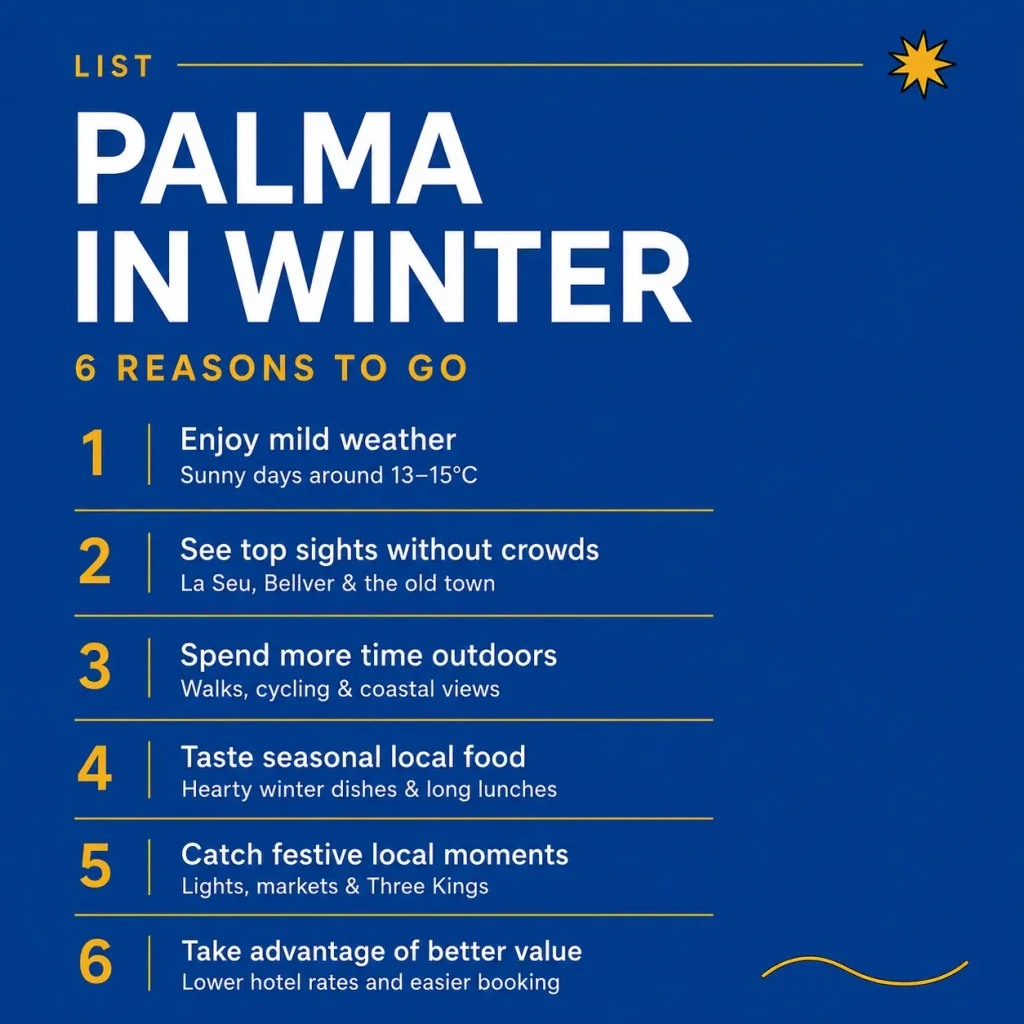
In winter, the city slows to its natural rhythm. You get:
- Mild days for walking, cycling, and hiking
- Short queues at major sights
- Easier tables at good restaurants
- Lower‑stress travel logistics and prices
- Authentic seasonal food you’ll rarely see in August
If you’ve always known Mallorca as a beach‑and‑sunlounger island, a winter stay in Palma will change your picture of it completely.
To get started, pick your dates between December and February, base yourself in or near the old town, and plan a simple mix: one hiking or cycling day, one cathedral/old town day, one markets‑and‑shopping day, and as many long, unhurried dinners as you can fit in.

Alison is a travel writer with a passion for solo adventures, photography, and Mediterranean escapes. She enjoys exploring Mallorca’s scenic coastline, charming villages, boutique hotels, and hidden gems, sharing stories that inspire curious travelers to discover the island beyond the obvious. Her work has been featured in outlets including Forbes, CNN, Travel + Leisure, and Yahoo.