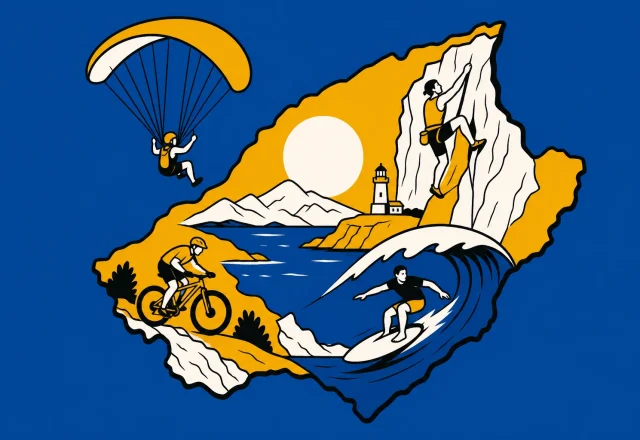
Salt on your skin, limestone under your fingers, and the Tramuntana ridgeline in your peripheral vision. That’s the version of Mallorca thrill‑seekers fly in for.
If you’re choosing between canyons, cliffs, and waves, this guide helps you pick the right hit of adrenaline and the best place on the island to get it.
Quick overview: adventure sports in Mallorca
| Sport | Best for | Top areas / hubs | Best season (typical) |
|---|---|---|---|
| Flyboarding | Short, intense thrills | Palma, Magaluf, Alcúdia Bay | May–Oct |
| Mountain biking | Endurance & scenery | Serra de Tramuntana, Artà, Llucmajor | Mar–Jun, Sep–Nov |
| Diving | Underwater caves & marine life | Cala Ratjada, Porto Cristo, El Toro | May–Oct |
| Jet skiing | Speed on the water | Palma, Santa Ponsa, Port d’Alcúdia | May–Oct |
| Rock climbing | Vertical challenges & sea cliffs | Sa Gubia, Port de Sóller, Cala Magraner | Oct–Apr (shade spots in summer) |
| Windsurfing | Wind-powered speed | Pollensa Bay, Alcúdia, Playa de Palma | Apr–Oct |
| Canyoning | Technical thrills in gorges | Sa Fosca, Torrent de Pareis, Coanegra | Nov–Apr (after rains) |
| Coasteering | Jumps, swims, and scrambles | Southwest coast, Peguera–Santa Ponsa | Apr–Oct |
| Wakeboarding | Cable & boat sessions | Alcúdia cable park, Palma surrounds | Apr–Oct |
| Kitesurfing | Big wind days & progression | Pollensa Bay, Son Serra de Marina | Apr–Oct (spring strongest) |
Use it as a snapshot, then dig into what actually fits your experience and appetite for risk.
1. Flyboarding
Flyboarding feels like someone took a jet ski, flipped the direction of power, and handed it to you.
Most sessions run along the south and southwest coast, especially:
- Palma Bay
- Magaluf and Palmanova
- Alcúdia Bay in the north
You’ll stand on a board connected to a jet ski by a hose. The jet stream lifts you out of the water while an instructor controls the throttle. First 5 minutes: balance. Next 10: turning. After that, you’re playing with small dives and low spins.
Best season: May to October, when the water feels warm enough for long falls and repeated tries.
Good to know
- You don’t need experience, but confident swimming helps.
- Most operators provide helmet, impact vest, wetsuit, and insurance.
- Sessions usually last 20–30 minutes of flight time, which is enough for tired legs.
2. Mountain biking
Mallorca might be more famous for road cycling, but the off‑road network is dense and varied. You can move from smooth forest tracks to rocky singletrack within an hour.
Classic MTB zones include:
- Serra de Tramuntana: Long climbs, technical descents, big views. Routes around Bunyola, Sóller, and Lluc are favourites.
- Artà and Llevant area: Coastal tracks, rolling hills, and easier terrain that still feels wild.
- Llucmajor & Randa: Faster, more flowing trails with less exposure.
You’ll find dedicated bike shops in Palma, Alcúdia, and Port de Pollença that rent full‑suspension and hardtail bikes, plus helmets and basic tools. Many also offer GPX tracks or guided days if you don’t want to navigate dry stone maze‑trails alone.
Best season: March–June and September–November. Summer works for early starts but the midday heat drains you fast.
Safety & etiquette
- Fire risk is real in late summer. Stick to established trails and respect any closure signs.
- Carry more water than you think you need. Springs dry up toward late season.
- Expect loose rock and sharp limestone; tubeless tires with sealant save rides.
3. Diving
Mallorca’s underwater side hides caves, drop‑offs, and marine reserves where groupers seem as curious as you are.
Popular diving hubs:
- Cala Ratjada & Capdepera: Rocky coastline, caves, and clear water.
- Porto Cristo & east coast: Caverns and sheltered bays that suit mixed‑experience groups.
- El Toro Marine Reserve (southwest): Rich fish life and good visibility.
- Cabrera National Park: Protected island south of Mallorca, often arranged as day trips with local centers.
You’ll find options for:
- Intro dives for first‑timers
- Guided dives for certified divers
- Courses from Open Water up to advanced and specialty levels
Most centers provide full kit: wetsuit (often 5 mm), regulators, BCD, and weights. They’ll also handle boat transfers to sites.
Best season: May to October for warm water and stable conditions. Early and late summer give you slightly quieter sites.
Safety & eco tips
- Check that the dive center follows marine park rules and doesn’t feed wildlife.
- Don’t touch or stand on the seabed; the underwater zone is fragile.
- If you’re flying, leave enough time between last dive and flight departure.
4. Jet skiing
Jet skis turn a calm bay into your private roller coaster. Short, loud, and addictive.
Main bases sit around:
- Palma Bay: Multiple rental points close to the city.
- Santa Ponsa & Magaluf: Busy, sport‑focused beaches with circuits.
- Port d’Alcúdia: Long bay and guided coastal routes up toward the Formentor area.
You can choose between laps on a marked circuit or guided coastal tours with an instructor leading. Licenses aren’t usually required for short supervised sessions, but rules change, so operators brief you on current regulations.
Best season: May–October, with peak traffic in July and August.
Practical pointers
- Listen to the safety briefing; speed plus traffic needs discipline.
- Respect distance rules from swimmers and shorelines.
- Ask about fuel and insurance in the price, so there are no surprises.
5. Rock climbing and deep water soloing
Mallorca has become a reference point for both sport climbing and deep water soloing (psychobloc). Limestone walls rise out of valleys and straight from the sea.
Sport climbing
Well‑bolted crags are scattered along the Tramuntana and east coast. A few well‑known sectors:
- Sa Gubia (near Bunyola): Multi‑pitch lines with big exposure.
- Valldemossa & Sóller: Shorter approaches and varied grades, with shade options.
- Cala Magraner (east coast): Sea‑side routes with an atmosphere that feels like a natural climbing gym.
You’ll need at least a harness, helmet, climbing shoes, and belay device. Most climbers bring a 70 m rope and a full quickdraw set. If you’re new to the island or new to outdoor climbing, local guides can handle logistics and choose routes within your level.
Deep water soloing
Here, the sea acts as your crash pad. You climb above deep water without a rope, then drop or fall in. The most famous areas line the eastern and southeastern cliffs, often accessed by boat or short coastal walks.
Best season:
- Sport climbing: October to April, when temperatures favour friction. Shaded crags still work on summer mornings.
- Deep water soloing: Late spring to early autumn, when water feels forgiving.
Safety basics
- Always wear a helmet for sport climbing; rock quality varies.
- For deep water soloing, assess swell and tide, and never climb alone.
- Avoid throwing gear into the water; boats or dry bags let you protect the coastline.
6. Windsurfing
When the thermal winds settle over the bays, sails pop up one after another. Windsurfing blends board control with reading gusts and chop.
Key windsurf spots:
- Pollensa Bay: Steady afternoon winds, forgiving for progression.
- Alcúdia Bay: Long sandy beach and rental centers close to the water.
- Playa de Palma / Can Pastilla: Near the capital, with schools and rental options.
Beginners can start with wide, stable boards and small sails. Intermediate and advanced riders usually find freeride and freestyle gear at rental centers, though bringing your own setup gives you more precision.
Best season: April–October, with thermal breezes strongest in late spring and early summer. Winter can also deliver stronger wind days for experienced riders with thicker wetsuits.
Practical notes
- Ask about safety boats; they’re common in busier schools and add peace of mind.
- Check wind forecasts and sea state before committing to a long session.
- Start upwind of your exit point so you can drift back if you tire.
7. Canyoning
When winter rain hits the Tramuntana, dry ravines transform into technical playgrounds: abseils, slides, jumps, and cold, clear pools.
Well‑known canyons include:
- Torrent de Pareis: Huge walls and serious commitment; not for first‑timers.
- Sa Fosca (Gorg Blau): Dark, narrow sections and long days out, often guided.
- Coanegra and Biniaraix: More approachable options, still demanding respect.
Canyoning usually involves hiking in, then descending with a mix of rope work and controlled slides or jumps. Water volume changes quickly after rain, so locals and guides rely on recent condition reports.
Best season: Roughly November to April, depending on rainfall. Summer often dries the channels out too much for enjoyable descents.
Gear & safety
- A thick wetsuit, helmet, harness, and canyoning‑specific shoes help a lot.
- Technical skills matter; if you’re not fluent with anchors and rope management, hire a guide.
- Respect weather forecasts. Sudden downpours can turn a narrow gorge into a flood path.
8. Coasteering
Coasteering strings together cliff jumps, short swims, traverses, and scrambles along rocky shoreline. Think of it as a sampler platter of movement: a bit of climbing, a touch of canyoning, lots of wild swimming.
Hotspots lie mainly on the southwest and southeast coasts, often near:
- Peguera
- Santa Ponsa
- Portals and surrounding coves
Guided trips include helmets, buoyancy aids, wetsuits, and usually transport from a meeting point. Guides choose jump heights to match the group, from low, repeatable hops up to serious leaps for confident participants.
Best season: April–October, once the sea warms up. Early and late season trips lean heavily on wetsuits and shorter immersion times.
Safety and sustainability
- Never jump without checking depth and obstacles first; guides handle this on organised trips.
- Enter and exit the water carefully; wet limestone cuts and bruises quickly.
- Leave cliffs and caves as you found them, and avoid visiting nesting areas in sensitive periods if guides suggest alternative spots.
9. Wakeboarding
Wakeboarding in Mallorca splits into two main styles: cable parks and boat‑towed sessions.
- Cable park in Alcúdia Bay: Offers park features like kickers and sliders, plus beginner‑friendly lines at lower speeds.
- Boat wakeboarding near Palma and Alcúdia: Focuses on carving and wake tricks behind inboard boats, with tailored rope lengths.
Cable options work well if you want lots of time on the water at a controlled price. Boat sessions often give more bespoke coaching and a smoother wake, but cost more per minute riding.
Best season: April–October, peaking in summer when flat, glassy mornings line up with warm water.
What to expect
- Rental packages usually include board, vest, and helmet. Bring your own if you’re picky about stance and flex.
- First‑timers can often start on a kneeboard or wider board to learn handle control.
- Check whether coaching is included or extra; targeted tips speed up progression.
10. Kitesurfing
On the right day, Pollensa Bay fills with colourful kites sprinting back and forth across shallow water. It’s one of Mallorca’s most recognisable adventure scenes.
Main kite areas:
- Pollensa Bay: Large shallow sections, safety boats, and several schools.
- Son Serra de Marina: More open and wavy, better for experienced riders.
Learning usually takes place over multi‑day courses with a mix of beach theory, body‑dragging in the water, and eventually board starts. Once you’re up and riding, Mallorca’s bays give you ample space to work on edging, transitions, and simple jumps.
Best season: April–October. Spring often brings the most reliable wind, but summer thermal breezes can also line up with lessons.
Safety essentials
- Respect kite zones and no‑go swim areas.
- Take a certified course instead of asking a friend to “show you quickly.” Power management and safety systems matter.
- Eco‑wise, use existing launch corridors and avoid fragile dune systems.
When to visit Mallorca for adventure sports
You can play outdoors in Mallorca all year, but different sports shine in different windows.
- Spring (March–May): Excellent for mountain biking, climbing, windsurfing, and early coasteering. Wildflowers and cooler air help with endurance days.
- Summer (June–August): Prime time for water sports: flyboarding, jet skiing, diving, coasteering, wakeboarding, and kitesurfing. Plan early or late sessions to dodge midday heat.
- Autumn (September–November): Warm sea lingers, making a strong mix of water and land sports. MTB and climbing conditions improve again.
- Winter (December–February): Canyoning season starts, and cool air suits harder climbing. Some water‑based operations pause or switch to reduced schedules.
Align your main goal with the season, then add one or two “bonus” sports that fit the conditions once you arrive.
Staying safe and respecting the island
Adventure feels better when you’re not worrying about trip‑ending mistakes or your impact on the environment.
General safety
- Go with certified local guides for technical activities like canyoning, deep water soloing, and first‑time kitesurfing.
- Check your travel insurance actually covers the sports you plan to do. Many basic policies exclude “high‑risk” activities.
- Hydrate aggressively in warm months and protect yourself from the sun; burns and heat exhaustion end more days than injuries.
Eco‑friendly choices
- Choose operators that limit group sizes and follow local regulations in marine reserves and protected areas.
- Use refillable water bottles and avoid single‑use plastics on boats and at the beach.
- Stick to marked paths in the Tramuntana; the dry stone terraces and trails are part of a cultural landscape recognised by UNESCO.
How to choose your adventure sport
If you’re staring at a long list of options, use three quick filters:
Comfort with water vs. heights
- Water‑comfort but height‑shy? Try diving, wakeboarding, or flyboarding.
- Good with exposure and rope work? Rock climbing or canyoning fit you better.
Fitness and impact level
- Lower impact: diving, boat wakeboarding, and gentler paddle‑style days.
- Higher output: mountain biking, kitesurfing, intense coasteering routes.
Time and learning curve
- Fast hits in under an hour: jet skiing, flyboarding.
- Skills that reward multi‑day focus: kitesurfing, windsurfing, climbing.
Plan one “headline” activity that excites you most, then leave a spare slot in your schedule. Once you’re on the island, ask local guides or shops what conditions favour that week and pick something that matches the weather.
Then start with one clear step: book a spot for the sport that scares you just enough to feel alive.

Alison is a travel writer with a passion for solo adventures, photography, and Mediterranean escapes. She enjoys exploring Mallorca’s scenic coastline, charming villages, boutique hotels, and hidden gems, sharing stories that inspire curious travelers to discover the island beyond the obvious. Her work has been featured in outlets including Forbes, CNN, Travel + Leisure, and Yahoo.