You don’t fly to Mallorca to ride boring roads.
You come for big climbs, quiet lanes, and coffee stops with sea views.
Mallorca still sets the standard for European cycling in 2026. The mix is hard to beat: the Serra de Tramuntana’s long mountain passes, rolling countryside lined with stone walls, and wide coastal roads that tempt you into adding “just one more” viewpoint. The climate helps as well. Mild winters, dry springs, and long evenings from April to October mean you can plan serious training weeks or relaxed cycling holidays almost year-round.
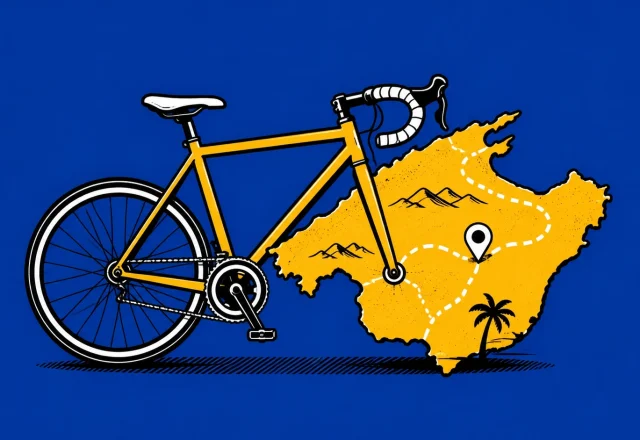
Below you’ll find four favourite cycling routes in Mallorca, updated for 2026. One crosses almost the whole island ridge, another dives into the southwestern hills from Palma, a third takes you out to Cap de Formentor, and the last rolls through vineyards and coves in the quieter south. Pick one, or ride all four during a week on the island.
Route 1: Andratx to Port de Pollença – “The Big Daddy Challenge”
Distance: approx. 162 km
Elevation gain: +4,300 m
Skill level: Advanced / Expert
If you want a big day out, this is it. The Andratx–Port de Pollença traverse follows the MA-10 along the entire Serra de Tramuntana, from the southwest tip to the far north of the island. It strings together legendary climbs, hidden coves, and mountain villages in a single ride.
You roll out from Andratx, a working harbour town, and start climbing almost immediately towards the MA-10. The first reward comes quickly: sweeping coastal views near Port des Canonge and Port de Valldemossa, with sinuous descents that drop you back towards the sea before pitching up again.
Valldemossa, Deià, and Sóller sit like stepping stones along the route. Valldemossa is worth a short stop: narrow streets, the Carthusian monastery linked to Frédéric Chopin’s winter stay, and several cafes that now double as mini bike hubs with pumps and basic tools. The road then threads through Deià’s terraced hillsides before dropping into Sóller, where you can top up bottles and calories before the serious climbing starts.
From Sóller you head towards Puig Major, one of Mallorca’s classic ascents. The climb is long rather than brutally steep, with tunnels and high-mountain scenery that feel a world away from the beach resorts. Once you crest the area near the reservoirs, you can add the famous Sa Calobra detour if your legs and schedule allow. Sa Calobra’s stack of hairpins down to the port, then back up its 26-or-so switchbacks, is a rite of passage for many visiting cyclists.
Back on the main ridge, the ride softens into faster rolling terrain past Lluc Monastery and through quiet high-country valleys. From there, the route gradually tilts down towards Port de Pollença, finishing with easier countryside kilometres and a final sweep along the bay.
2026 updates & practical tips
- Navigation: Use GPS apps such as Komoot or Strava for the full route and live elevation profiles. Signal coverage is generally good along the MA-10.
- Start time: Aim to roll out between 7:00 and 8:00 a.m. to avoid midday heat and heavier vehicle traffic on the scenic stretches.
- Refuelling: Valldemossa, Deià, Sóller, Lluc, and a handful of petrol stations along the MA-10 all work well for food and water stops. Several spots now offer bike-specific services and floor pumps.
- Shuttle logistics: During spring and autumn, shuttle services run between Port de Pollença and Andratx, letting you ride point-to-point without worrying about a long transfer back.
- Road conditions: Surfacing on key descents has improved since 2025, especially near Port de Valldemossa and sections around the reservoirs. Some tunnels remain narrow and dark, so carry front and rear lights.
- Who should ride it: Strong, experienced riders comfortable with long days and sustained climbing. Plan 7–10 hours depending on pace and stops.
Route 2: Southwestern loop from Palma
Distance: approx. 80 km
Elevation gain: +1,760 m
Skill level: Intermediate
Base yourself in Palma and you can ride straight from the hotel to serious hills. The southwestern loop packs a lot into roughly 80 kilometres: shaded climbs, rugged coastline, and quiet inland lanes, all within striking distance of the capital.
Most riders leave Palma heading northwest towards Genova and then up to Esporles. The first climb out of the city wakes the legs quickly, but traffic thins as soon as you hit the foothills. Esporles makes a good first coffee stop, framed by stone houses and terraces.
From Esporles, the road continues into the lower Serra de Tramuntana, trending towards Banyalbufar. Views open up dramatically here, with the sea often far below the road. Short climbs stack on top of each other, followed by rewarding coastal descents that twist through pine forest and scrubland.
The loop can then arc through Estellencs and towards Andratx before cutting inland again, or you can shorten it by turning earlier towards Calvià and then back to Palma. Village squares in Estellencs, Calvià, and nearby towns now host a handful of cycling-focused cafés and bike-friendly restaurants, handy for regrouping and eating real food instead of living on gels.
2026 updates & practical tips
- Roadworks: Resurfacing and minor widening projects completed since 2025 have smoothed several rough sections, especially between Esporles and Banyalbufar. That means fewer pothole dodges and more focus on the ride.
- Route variants: If 80 km and 1,700+ metres of climbing feels ambitious, skip the longest climbs near Calvià or cut the loop short by heading back towards Palma earlier, giving you a 40–50 km ride with less elevation.
- Timing: Early spring (March–April) and late autumn (October–November) hit the sweet spot of cooler temperatures and lighter tourist traffic on the coastal stretches.
- Bike hire: Palma has a dense cluster of rental shops offering road, gravel, and e-bikes, so you can build this loop into a city-based short break.
Route 3: Northeastern loop from Alcudia – Cap de Formentor experience
Distance: approx. 63 km
Elevation gain: +1,000 m
Skill level: Intermediate to Advanced
If you’ve seen photos of Mallorca cycling, you’ve probably seen Cap de Formentor. Cliffs plunging into clear water, a white lighthouse on the point, and a ribbon of tarmac clinging to the ridge. The northeastern loop from Alcudia lets you experience that classic stretch within a manageable distance.
Start in Alcudia’s old town or the port area and roll along the bay to Port de Pollença. This flat coastal road is perfect for warming up and offers wide-open views across the water. Early mornings here feel calm, with just a few other riders and local commuters on the move.
From Port de Pollença, the road kicks up towards the Formentor peninsula. The first climb winds through forested slopes and rocky outcrops, then undulates across the spine of the peninsula with several lookouts worth a photo stop. Wind can be a major factor. On gusty days, the ride feels much harder than the numbers suggest.
Most riders go all the way to the lighthouse, pause for a snack and some photos, then retrace their steps back to the junction near Port de Pollença. From there, you can either return directly to Alcudia the way you came or extend the loop slightly via Pollença town, passing through narrow streets and a lively central square.
2026 updates & practical tips
- Best seasons: Spring and autumn still offer the best balance of temperature and traffic. Summer afternoons can be very hot, with strong winds on exposed sections.
- Traffic controls: Added restrictions on vehicle access around Cap de Formentor during peak hours have improved conditions for cyclists. Car numbers are capped during busy times, so check current schedules locally.
- Bike facilities: New bike parking and racks around Pollença and Port de Pollença make café stops easier, and several local guides now run rides that weave in visits to historic churches, small museums, and weekly markets.
- Skill level: The route is technically accessible, but the combination of climbing, exposure to wind, and steep descents suits confident riders. Good brakes and solid descending skills pay off here.
Route 4: Southern vineyard & coastal loop (new 2026 favourite)
Distance: approx. 75 km
Elevation gain: +650 m
Skill level: Beginner to Intermediate
Head south and the atmosphere changes. Fewer big tour buses, more tractors, and long, gently rolling lanes bordered by vineyards and olive groves. The southern vineyard and coastal loop has grown in popularity in 2026, especially for riders who prefer steady pedalling to mountain passes.
Many riders start around Campos or Santanyí, both accessible by car from Palma or via local transfers arranged by bike hire shops. From there, the loop threads through countryside near Felanitx and smaller villages where time seems to move slower. Elevation changes are mild, with just enough gradient to keep things interesting.
Sections of the route cut towards the coast, offering glimpses of turquoise coves like Cala Mondragó and Cala Santanyí. You can build in short detours down to the beaches if you don’t mind an extra climb back up. Inland, the roads pass boutique wineries offering tastings and tours, often with shaded terraces perfect for a relaxed lunch.
Because traffic is lighter here than in the Tramuntana, the route suits riders who value quiet roads over dramatic switchbacks. It’s also one of the more family‑friendly options, especially with the growing fleet of e-bikes available for hire.
2026 updates & practical tips
- Who it suits: Recreational riders, mixed-ability groups, and families looking for a scenic ride without huge climbing demands.
- E-bike options: Southern hire companies now stock more e-bikes specifically for these vineyard loops, making the few sharper ramps easy to handle even for less fit riders.
- Seasonal sweet spots: Spring and autumn provide green fields and comfortable temperatures, while mild winter days can also be excellent. Summer midday heat can be fierce, so plan early starts or late afternoon rides.
- Local stops: Wineries near Felanitx and Santanyí often require bookings for full tastings, especially during harvest periods. Check in advance if you want a longer stop.
Quick comparison: four favourite cycling routes in Mallorca
| Route & name | Distance | Elevation gain | Skill level | Main appeal |
|---|---|---|---|---|
| Andratx → Port de Pollença “Big Daddy” | ~162 km | ~4,300 m | Advanced / Expert | Full Serra de Tramuntana traverse |
| Southwestern loop from Palma | ~80 km | ~1,760 m | Intermediate | Hills and coast within reach of Palma |
| Alcudia / Cap de Formentor loop | ~63 km | ~1,000 m | Intermediate–Advanced | Iconic lighthouse and coastal scenery |
| Southern vineyard & coastal loop | ~75 km | ~650 m | Beginner–Intermediate | Quiet lanes, vineyards, and coves |
Mallorca cycling events in 2026
The Mallorca 312 Gran Fondo remains the flagship event on the island’s cycling calendar. Entries for the 2026 edition open from January, and places usually disappear fast. The event traditionally offers three route lengths, topping out at a huge 312 km challenge that shares many roads with the Andratx–Port de Pollença ride and other Tramuntana classics.
Alongside the 312, various sportives and club events run through the season. Many base themselves in Alcudia, Port de Pollença, or Playa de Muro, taking advantage of the flat coastal roads for mass starts and the nearby mountains for timed segments. For riders who don’t care about results sheets, local clubs often welcome guests on social rides that showcase quiet backroads far from the main tourist circuits.
Bike hire and accommodation tips for 2026
Mallorca’s cycling infrastructure keeps getting better. That shows in the range of bikes available and how easily you can find bike‑friendly places to stay.
- Bike hire: Palma, Port de Pollença, and Alcudia top the list for rental options. Shops now routinely offer high‑end carbon road bikes, gravel bikes for inland tracks, and a wide range of e-bikes. Many provide pre‑booking, bike fitting, and airport transfer packages.
- Service and support: Larger outfits operate mobile mechanics or partner workshops around the island, useful if you have a mechanical issue mid‑week.
- Accommodation: Look for hotels and agriturismos that advertise secure bike storage, basic tools, and early breakfast options. In the Tramuntana, small rural stays give quick access to climbs. On the coasts, resort hotels in places like Port de Pollença often include dedicated bike garages and wash areas.
- Booking timing: Spring and autumn remain peak cycling seasons. If you plan to visit from March to May or late September to November, book both your accommodation and preferred bike model several months ahead.
Safety and preparation tips
Mallorca is well set up for bikes, but it’s still real road riding with real risks. A bit of preparation goes a long way.
- Clothing: Bring layers for mountain routes like Puig Major and Cap de Formentor. Temperatures can drop sharply at altitude even on warm days. Pack a gilet or light jacket for long descents.
- Sun and hydration: UV levels ramp up quickly from late spring. Use high‑SPF sunscreen, sunglasses, and plan regular water stops. On longer rides like Andratx to Port de Pollença, carry extra bottles or a hydration pack.
- Equipment: Helmets are non‑negotiable. Front and rear lights help in tunnels and low‑light conditions, especially on the MA-10 and around Sa Calobra. Check your brake pads before tackling steep descents.
- Road awareness: Some sections include narrow tunnels, tight hairpins, and mixed traffic. Descend within your limits and expect occasional grit or damp patches in shaded corners.
- Travel checks: Before you fly, look up current travel and health advisories for Spain and the Balearic Islands, and confirm your insurance covers road cycling.
Local culture and sights along the routes
Part of Mallorca’s appeal lies off the bike. Each of the four favourite cycling routes in Mallorca threads past places worth unclipping for.
On the Big Daddy route, Valldemossa offers monastery courtyards and Chopin history, while Fornalutx near Sóller has often been cited as one of Spain’s prettiest villages, with stone alleys and mountain views in every direction. The quiet courtyard at Lluc Monastery provides a peaceful breather before the final run towards the north.
Along the Cap de Formentor loop, Pollença rewards a post‑ride stroll. Climb the Calvari steps if your legs tolerate one more ascent, or just sit in the main square with a coffee and watch the world go by. In the south, weekly markets in Campos, Felanitx, and Santanyí showcase local produce, crafts, and a more traditional side of the island than the resort strips.
Build your days so you can enjoy both: strong rides in the morning, then a slow walk through an old town in the late afternoon.
How to choose your first route
Pick one of the four favourite cycling routes in Mallorca based on where you’re staying and how hard you want to ride:
- Want a career‑highlight challenge? Start with the Andratx to Port de Pollença traverse and plan a recovery day afterwards.
- Staying in Palma and short on time? Ride the southwestern loop and be back for a late lunch in the old town.
- Chasing postcard views? Base in Alcudia or Port de Pollença and aim for Cap de Formentor early in your trip.
- Travelling with mixed‑ability riders or family? Book e‑bikes and enjoy the southern vineyard and coastal loop at a relaxed pace.
Pick your base, rent a bike that fits, load a GPX file, and roll out. The island will take care of the rest.

Alison is a travel writer with a passion for solo adventures, photography, and Mediterranean escapes. She enjoys exploring Mallorca’s scenic coastline, charming villages, boutique hotels, and hidden gems, sharing stories that inspire curious travelers to discover the island beyond the obvious. Her work has been featured in outlets including Forbes, CNN, Travel + Leisure, and Yahoo.